
Faith at Risk
 Have
you left a high-demand church, only to find that now your faith in God
is wavering? What was the most meaningful part of your life now confused and
shattered? Angry at God for the pain and betrayal. You may be "allergic" to the Bible, and church.
You may feel like you aren't an acceptable Christian anymore.
Have
you left a high-demand church, only to find that now your faith in God
is wavering? What was the most meaningful part of your life now confused and
shattered? Angry at God for the pain and betrayal. You may be "allergic" to the Bible, and church.
You may feel like you aren't an acceptable Christian anymore.
When I first put this section together many years ago, I assumed other people's experience would be similar to mine after we left the Assembly. Our leaving shook my faith. It wasn't the first time I had struggled with doubts. So I did what had always helped me - I turned to C. S. Lewis. Rereading him and a few others cleared my head and my heart.
But there is a huge difference between my life of faith and that of many former Assembly members. The difference is that I came to faith in Christ ten years before I came under George and Betty's influence. I had already formed a firm understanding of the nature of God. I knew His goodness, His love, the depth of his gift of salvation through faith in Christ.
George and Betty communicated a very different understanding of God. Tamilla wrote about this. She goes so far as to say that the Assembly god was not the God of the Bible. One aspect of this that I want to want to make clear right here at the beginning of this section is that we as believing Christians are not under God's condemnation. My son, Lee Irons, Ph.D., who grew up in the Assembly and is now a pastor, teaches purposefully to counter George and Betty's false indoctrination - 'Raised for Our Justification' and 'Living as Heirs'.
• Does Faith Make Sense?
• Can the Bible Be Trusted?
• Why Does God Allow Tragedy & Evil?
• Apologetics Strengthens Faltering Faith
• Science & Faith
• Resources for Students
• Other Encouragements to faith
Does Faith Make Sense?
Jude 1:3 tells us to "contend earnestly for the faith." Paul used philosophical arguments, fulfilled prophecy, and especially the evidence for the resurrection to convince and persuade people of the truth of Christianity. The Assembly avoided this approach, for reasons that are explored elsewhere on this website, mainly because critical thinking was a danger to the system.
Consequently, people who came to Christ through Assembly outreaches may be susceptible to attacks on the reasonableness of their faith. But to quote Brady Lenardos, "The fact is that the Christian position holds the high intellectual ground." Articles and resources in this section are mainly apologetic, to help buttress faith and to give those who seem to have given up on faith some things to chew over.
(The philosophical term "apologetics" is used a few times in this section. It comes from the Greek word "apologia" which means "to defend." For example, Socrates defended himself at the court of Athens in Plato’s "The Apology of Socrates.")
~
Michael Spencer, the Internet Monk, wrote about Why I am a Christian, and about his doubts, and the factors that kept him still believing.
~
Ken Samples presents Five Reasons God Exists on You Tube. Ken serves on the editorial and communication staff at Reasons to Believe (Dr. Hugh Ross).
~
Tim Keller's book, The Reason for God, is reviewed on The Gospel Coalition website.
"Design Evidences in the Cosmos", video, Dr. Hugh Ross
"Five Reasons God Exists", video, Ken Samples
Simply Christian: Why Christianity Makes Sense, by N. T. Wright, reviewed by Christianity Today.
~
In his article The Psychology of Atheism, by Dr. Paul C. Vitz, presents the idea that a key element in the development of atheism is the perception that fathers, including God, are defective. He gives many biographical examples of how skepticism developed in well-known atheists that may resonate with many who've experienced spiritual betrayal. We have been bitterly betrayed by our "spiritual father," George Geftakys, and his leaders. It makes sense if we now tend to distrust a "defective" Father God who did not protect us.
Understanding why one seems to be losing one's faith may be prerequisite to finding it again. Dr. Vitz, a professor of psychology at New York University, became an atheist in college. He presents an amusing and relevant account of why this happened. He remained an atheist-skeptic until his late thirties, when he came back to faith, as he says, "...much to my surprise, in the very secular environment of academic psychology in New York City."
~
The philosopher Blaise Pascal formulated a famous argument for belief in the existence of God called "The Wager", which Ken Samples discusses in this article, "The Wager: Gambling on God". Elsewhere he says, "The more astronomers learn about the origin and development of the universe, the more evidence they accumulate for the God of the Bible.
"Ironically, those who fought hardest against God as the explanation for the cosmos often were the ones whose work provided the most powerful new evidence for Him. Today, with the measuring of the creation has come the scientific equipment to make a positive identification of the Creator.
"Though not many who write about these new measurements acknowledge Jesus Christ as Lord and Savior, they typically confess that the only explanation for the universe we observe is the action of an entity beyond the space-time continuum of the universe who/that is capable of design and of carrying out that design.
"All they typically lack is the theological knowledge or the courage to recognize that in their confession they have testified of none other than the God of the Bible."
~
The Time Magazine cover story for the week of November 5, 2006, was a debate between atheist scientist Richard Dawkins, and Francis Collins, Christian head of the Human Genome Project.
~
Dr. Anthony Flew is a legendary British philosopher and atheist, and has been an icon and champion for unbelievers for decades. His change of mind from atheist to theist was significant news in 2004, not only about his personal journey, but also about the persuasive power of the arguments modern theists have been using to challenge atheistic naturalism. He was interviewed by Gary Habermas in 2004.
Can the Bible be trusted?
The wide popularity of The Da Vinci Code, and Dr. Bart Ehrman's book, Misquoting Jesus, fueled a wave of skepticism about Christianity and the validity of the Bible. This can feel either like an attack on your faith, or like welcome justification for withdrawing from God, depending on where you are with faith after the Assembly. There are good arguments against the ideas proposed by Dan Brown and Bart Ehrman. Dr. Erhman and Dr. William Lane Craig debated the topic, "Is There Historical Evidence for the Resurrection of Jesus?" in 2006. Michael Spencer comments on the debate, "It’s impressive in many ways: scope, depth, congeniality, candor and readability." The text of the debate is here.
~
Misanalyzing Text Criticism--Bart Ehrman's Misquoting Jesus--Dr. Ben Witherington comments on Ehrman's book and quotes from Dr. Dan Wallace. Both these men are scholarly peers of Erhman, well qualified to critique his work.
Dr. Wallace is Professor of New Testament Studies at Dallas Theological Seminary, and senior editor of the NET Bible. Wikipedia says, "Wallace is considered an authority on textual criticism among evangelical scholars." Dr. Witherington is Professor of New Testament Interpretation at Asbury Theological Seminary and an elected member of the prestigious SNTS, a society dedicated to New Testament studies. He has taught at Vanderbilt University, Duke Divinity School and Gordon-Conwell.
~
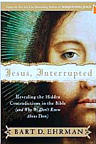 Ben
Witherington has a
post on Bart Ehrman’s book,
Jesus Interrupted: Revealing the hidden contradictions in the Bible
(and why we didn’t know about them). Dr. Witherington approaches it on a
scholarly level, eschewing any fundamentalistic emotional rant on inerrancy. He
deftly teases out the weaknesses in Ehrman’s arguments and brings the
conversation around to the big picture of the reliability of the Bible as we
have it. Thought-provoking reading for those who would like to dismiss
Christianity after a devastating church experience.
Ben
Witherington has a
post on Bart Ehrman’s book,
Jesus Interrupted: Revealing the hidden contradictions in the Bible
(and why we didn’t know about them). Dr. Witherington approaches it on a
scholarly level, eschewing any fundamentalistic emotional rant on inerrancy. He
deftly teases out the weaknesses in Ehrman’s arguments and brings the
conversation around to the big picture of the reliability of the Bible as we
have it. Thought-provoking reading for those who would like to dismiss
Christianity after a devastating church experience.
~
The Da Vinci Code: The Facts Behind the Fiction covers Primetime's special on Elizabeth Vargas' investigation into the claims made in The Da Vinci Code.
~
In The "Gospel of Judas": National Geographic attacks Christianity with biased research, Rich Deem points out false statements regarding authorship, dating of the document, etc., based on a pro-gnostic bias. The content of the artifact itself clearly states who wrote it (not Judas), and its explicit purpose - to counter Christian beliefs with polytheistic Gnostic mythology.
Why Does God Allow Evil and Tragedy?
Michael Spencer posts on The Ecclesiastes Attitude, pondering "the mixture of causation" of events in our lives, and noting that God's purposes seem more often to be in our mistakes and their consequences than in our successes.
~
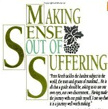 Peter Kreeft gives the bottom line to Making Sense
of Suffering with the incisiveness of a Christian philosopher. This article is an excerpt from chapter seven of
his book.
Peter Kreeft gives the bottom line to Making Sense
of Suffering with the incisiveness of a Christian philosopher. This article is an excerpt from chapter seven of
his book.
~
Does God care about us if he allows tragedies to happen? The question, "Why?" is one that probably everyone who has left the Assemblies has struggled with. M. Irons offers one perspective.
~
"Stand to Reason" scholar, Gregory Koukl, had an in-depth article, A Good Reason for Evil, which is also available as a podcast.
Apologetics Strengthen Faltering Faith.
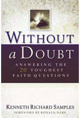 Without a Doubt, by Kenneth R. Samples. A great little resource to bolster
wavering faith. "One of the unique aspects of Christianity is that
it stands up to honest intellectual scrutiny...Without a Doubt
covers questions on everything from the doctrine of the incarnation
to religious pluralism, from evolution to moral relativism, with
rational answers for even the most stubborn skeptic." Samples
also has a blog post on
"The Historic Alignment of Christianity and
Science."
Without a Doubt, by Kenneth R. Samples. A great little resource to bolster
wavering faith. "One of the unique aspects of Christianity is that
it stands up to honest intellectual scrutiny...Without a Doubt
covers questions on everything from the doctrine of the incarnation
to religious pluralism, from evolution to moral relativism, with
rational answers for even the most stubborn skeptic." Samples
also has a blog post on
"The Historic Alignment of Christianity and
Science."
Science & Faith
Reasons to Believe: Providing Powerful New Reasons from Science to Believe in Christ - Website of Dr. Hugh Ross's premier science-faith think tank. Multimedia, articles, scientific papers links and more. Tom Maddux volunteers for RTB.
~
The God and Science site is recommended by Tom Maddux. Sections on "Answers for Atheists", "Design vs. Evolution", "Biblical Creation", Biblical Authenticity", slides, discussion forum and more. Dr. Rich Deem, who runs the site, is a molecular biologist doing immunology research at Cedars-Sinai Hospital.
~
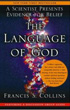 The Language of God - A Scientist Presents Evidence for Belief, by Dr. Francis Collins, head of the
Human Genome Project. Available in print and audio. "The experience
of sequencing the human genome, and uncovering this most remarkable
of all texts, was both a stunning scientific achievement and an
occasion of worship."
The Language of God - A Scientist Presents Evidence for Belief, by Dr. Francis Collins, head of the
Human Genome Project. Available in print and audio. "The experience
of sequencing the human genome, and uncovering this most remarkable
of all texts, was both a stunning scientific achievement and an
occasion of worship."
~
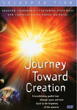 Journey Toward Creation - DVD. "Explore the astronomical
evidence for a universe that is meticulously fine tuned for the
benefit of human life. Astronomer Hugh Ross whisks viewers through
the solar system, past stars, galaxies and quasars--all the way back
to the moment when light first sprang from the darkness." This is
awesome.
Journey Toward Creation - DVD. "Explore the astronomical
evidence for a universe that is meticulously fine tuned for the
benefit of human life. Astronomer Hugh Ross whisks viewers through
the solar system, past stars, galaxies and quasars--all the way back
to the moment when light first sprang from the darkness." This is
awesome.
~
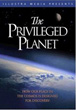 The Privileged Planet - DVD. "The more we learn about
single-cell creatures (as demonstrated in "Unlocking the Mystery of
Life,"), the more obvious it seems that our universe is
intentionally designed. The same is true when go into the opposite
direction. Though the universe is vast beyond imagination, "The
Privileged Planet" argues that the earth is unique indeed. The many
conditions necessary for life converge on the earth, something
unlikely to occur anywhere else."
The Privileged Planet - DVD. "The more we learn about
single-cell creatures (as demonstrated in "Unlocking the Mystery of
Life,"), the more obvious it seems that our universe is
intentionally designed. The same is true when go into the opposite
direction. Though the universe is vast beyond imagination, "The
Privileged Planet" argues that the earth is unique indeed. The many
conditions necessary for life converge on the earth, something
unlikely to occur anywhere else."
~
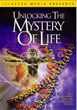 Unlocking the Mystery of Life - DVD. "No one looking at a rotary
motor says, 'Wonderful little accident here.' What if scientists
discovered a 'rotary motor' inside a human cell? See some of the
surprises that awaited researchers when high-tech instruments gave
them a close-up view of the cell's intricate inner workings." This
excellently produced account goes well with Dr. Collins' book,
The Language of God.
Unlocking the Mystery of Life - DVD. "No one looking at a rotary
motor says, 'Wonderful little accident here.' What if scientists
discovered a 'rotary motor' inside a human cell? See some of the
surprises that awaited researchers when high-tech instruments gave
them a close-up view of the cell's intricate inner workings." This
excellently produced account goes well with Dr. Collins' book,
The Language of God.
Resources for Students
Probe Ministries - Mainly geared to college students from the perspective of integrating faith and learning. Huge library, many apologetics articles.
~
EveryStudent.com - Developed by Campus Crusade for Christ. Offers personal responses to email questions about God.
