
Updates
Grace Elizabeth, a second-generation AK, shares interviews with former Assembly members in a new podcast, In God's Name: An Unseen Cult. Episodes air bimonthly on Sunday mornings at 9:00AM PST on Spotify and Amazon Podcasts. Watch for episode announcements below and see previews on Instagram @ingodsnamepod. Sunday April 7 will be the season finale, "The End - in loving memory of the future we thought we knew."
• February 25, 2024 9:00AM PST In God's Name: An Unseen Cult, Episode 4 'The Ephesians Wife'. "Submissive was a
big word - women were to be submissive."
• January 11, 2024 In God's Name: An Unseen Cult, Episode 3 'The Work/ers'. Finding yourself entrenched in a cult
is surprisingly easy.
• January 28, 2024 In God's Name: An Unseen Cult, Episode 2 'The Recruit'."Where do you think God wants you in
fellowship?"
• January 14, 2024 'In God's Name: An Unseen Cult', Episode 1 'The Founding'.
• December 31, 2023
In God's Name - An Unseen Cult, The Trailer. "I'm gonna quote George Geftakys."
Grace’s mother, Sue, has this to say about the project:
“From the start of her archival project for Cal St Fullerton through the transition to a podcast Grace Elizabeth has compiled information and documentation with the utmost professionalism, integrity of process and objectivity. Over the last 20 years I've heard many versions of people's remembrance of their experience in the Assembly. Most are a variation of, "It was a sincere group of people, but it got legalistic at the end," or, "Well, I was not in the inner circle so my experience was not so bad," or, "Yeah, it was not good, but I learned how to read my Bible and I made lifelong friends". There is a nugget of truth in every revisionist lie we tell ourselves. We do it to spare ourselves pain or shame, I think.
"But few are willing to admit that the Assembly fits the framework of a cult. The importance of this podcast is it lays bare our truth and the truth of the Assembly culture. Why it’s important is two-fold. Let it be a cautionary tale for those who seek to be Christ followers today...do not ignore the red flags. And for those of us who lived through it, to process the truth, accompanied with all the regret and remorse, because the unexamined life will continue to perpetuate a micro-version of the Assembly culture in another place and time.”
~◦~
March 2023 In March 2023 Dr. Janja Lalich was interviewed by Dr. Ramani on her
'Navigating Narcissism' podcast about 'What Is a Cult?' This is one of the best descriptions
we have heard about how cults function. It immediately brings to mind aspects of the Assembly. The YouTube podcast is almost two hours long;
here is a
link and a time-stamp of topics as they come up. She is one of the best minds out there working on the cult issue. We have long recommended her books, particularly
Take Back Your Life, which has just been released as an
audiobook.
Janja was a cult member herself for ten years. I met her in 1991 leading a workshop at a cult recovery
conference. She had been out of her group for several years. Since then she got a PhD in Sociology, taught at Cal State Chico for 30 years, and has written
some of the best books about how cults work.
~◦~

December 19, 2023 A guy who was born and raised a JW writes an
intriguing article comparing and contrasting
the experiences of leaving a cult to Neo's awakening in the 'Matrix' movies and Mal's failure to wake up in the movie 'Inception'.
~◦~
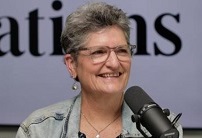
May 2023 Wendy Hinman, formerly from the Huntington Beach Assembly,
was interviewed in May 2023 by the 'Nations' podcast about her
family's cult experience. Here are some of the highlights:
• At minute 15:09 the discussion turns to her Assembly experience. She says, "I really think cults come out of a desire for community."
• 23:40 They talk about legalism and mind-control.
• 27:05 They discuss the four main characteristics of a cult.
• 36:10 Regarding child-rearing Wendy says, "I think all of my kids should be in therapy till the end of their days for what they endured."
~◦~
March 2023
Dawn (Geftakys) is interviewed on the "Tell Us
Something We Don't Know" podcast in an episode called "Born in a Cult". Dawn certainly tells us a few things we didn't know before about
the Geftakys clan.
~◦~
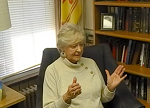 December 2022
Marilynn Mathias at 83 is interviewed by a pastor. She and
Gerald were pillars in the Tuscola Assembly from the very beginning. About 25 minutes into the video she describes her Assembly experience.
Her testimony
is full of grace, and truth.
December 2022
Marilynn Mathias at 83 is interviewed by a pastor. She and
Gerald were pillars in the Tuscola Assembly from the very beginning. About 25 minutes into the video she describes her Assembly experience.
Her testimony
is full of grace, and truth.
~◦~
August 15, 2022 A new page
on 'Assembly Damages' brainstorms a list of injuries and losses that happened to people in the Assembly. Comments are open so more can be added.
Lee Irons' review of Elizabeth Esther's book complements the list.
~◦~
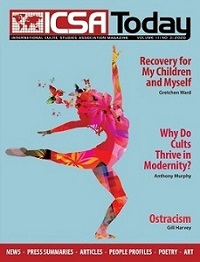
June 17, 2022 Gretchen Ward from the Assembly
in Omaha was asked
by the International Cultic Studies Association to write an article for publication in their journal in 2020. ICSA has graciously given us permission to link to
Recovery for My Children and Myself. Gretchen details her many efforts to get help for
her eight children after
they left the Assembly in 2004. This is a timely consideration in view of Betty's death. She was responsible for introducing the damaging family dynamics and
treatment of children in the Assembly.
~◦~
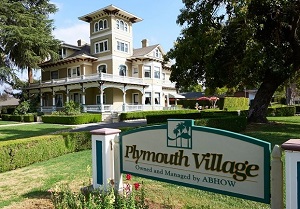
May 30, 2022 Betty Geftakys died.
She had been declining over the
past year and died in her sleep at Plymouth Village assisted living facility in Redlands.
~◦~
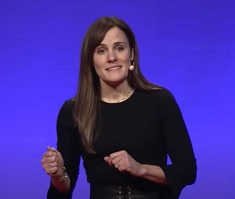
March 8, 2018 Dawn Smith gave a
TED Talk about the group she grew up in. Daniel Teater
posted it
on his Facebook page, where it has gotten several comments. Dawn told a
little story about her Dad, Tim Geftakys, on the Moth. She is quoted on the "All the Wiser"
site, and was interviewed by the media after her
presentation at the University of Regina 2020
Leadership Forum.
~◦~
May 22, 2017 David Geftakys died from kidney failure. At his request there was no funeral. He was buried in the Philippines.
~◦~
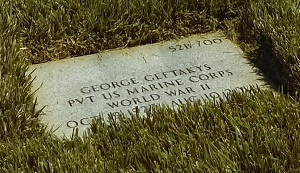
August 10, 2014 George Geftakys died.
He is buried at Riverside National Cemetary. Elizabeth Esther Geftakys
Henderson wrote about her grandfather's passing on her blog.
Her memoir, Girl at the
End of the World: My Escape from Fundamentalism in Search of Faith with a Future, also came out in 2014.
~◦~
Submit an update or a comment »»
~◦~
**Note: The word 'cult' is used on this site in the sociological sense, referring to the practice and conduct of the group, not beliefs or doctrine. More »»
